
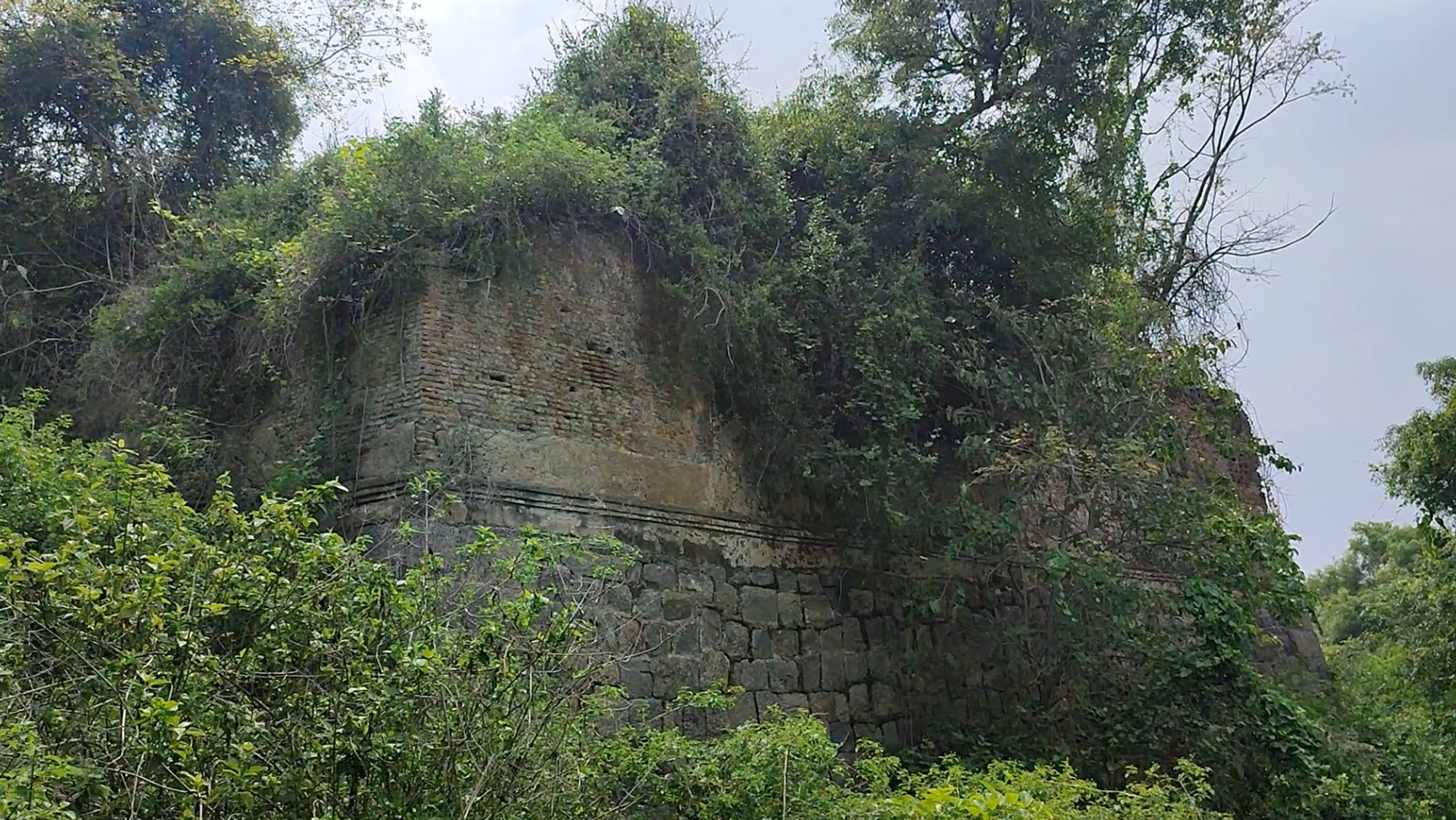
Exploring Thomas Inman’s Dungeon – A Forgotten Relic of Srirangapatna Fort
Srirangapatna, a town rich in history and heritage, is home to one of Karnataka’s most significant forts—Srirangapatna Fort. This historic stronghold, originally built by Timmanna Nayaka in 1454, was later fortified by Haider Ali and Tipu Sultan in the late 18th century with the help of French architects. Strategically located near the Kaveri River, the fort was naturally protected on three sides, making it a formidable defense against invaders.
Among the many hidden and forgotten sites within this fort is Thomas Inman’s Dungeon, a prison once used by Tipu Sultan to detain Marathas and other prisoners of war. Though overshadowed by the more famous Colonel Bailey’s Dungeon, this dungeon carries its own historical significance and mystery.
The Mystery of Thomas Inman’s Dungeon
Named after its discoverer, Thomas Inman, this dungeon remains a lesser-known yet intriguing part of Srirangapatna’s history. Used primarily during Tipu Sultan’s reign, the dungeon served as a prison for captured Maratha warriors and other war prisoners.
The design and structure of Thomas Inman’s Dungeon closely resemble Colonel Bailey’s Dungeon, another infamous prison within the fort. Both dungeons were built underground with low ceilings and iron rings fixed to the walls, where prisoners were chained. These dungeons bore witness to the struggles of those who were held captive during Tipu Sultan’s conflicts with the British and Marathas.
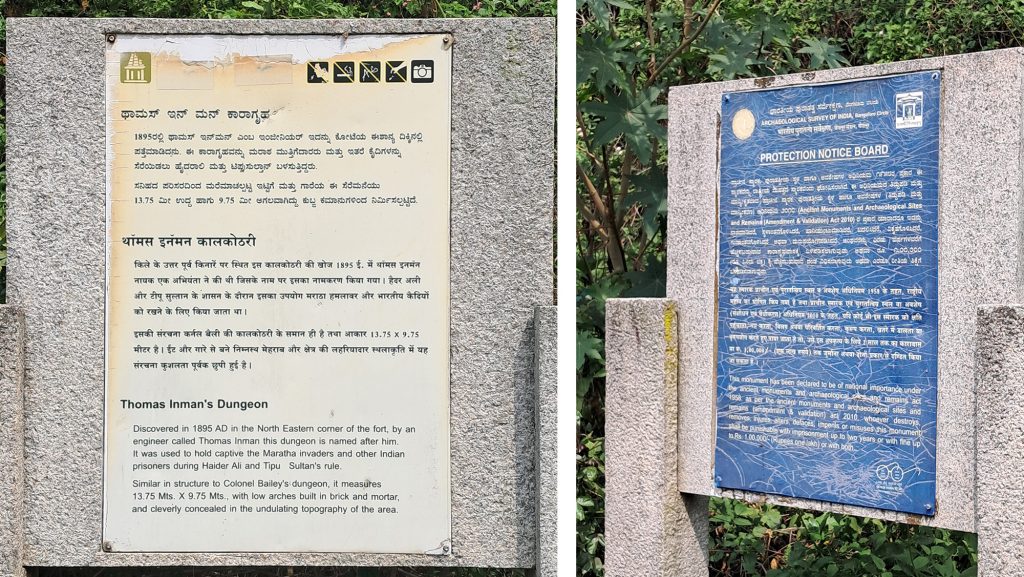
Current Condition – A Hidden Relic Lost to Time
Unlike many other historical monuments in Srirangapatna, Thomas Inman’s Dungeon is not open to the public. Over the years, it has been left abandoned and covered by dense vegetation, making it difficult for travelers to access or even locate.
The ruins of Srirangapatna Fort, including the Lal Mahal and Tipu’s palace, were destroyed when the British forces captured the fort in 1799. However, several key landmarks associated with Tipu Sultan’s legacy continue to be preserved under the Archaeological Survey of India (Bangalore Circle).
Other Historical Monuments in Srirangapatna
If you are visiting Srirangapatna, there are several other well-preserved historical sites to explore:
1. Colonel Bailey’s Dungeon : A more famous dungeon where Tipu Sultan imprisoned British officers.
2. Daria Daulat Bagh: Tipu Sultan’s summer palace, known for its exquisite paintings and wooden interiors.
3. Gumbaz – Tipu Sultan’s Tomb: The final resting place of Tipu Sultan, his father Haider Ali, and his mother Fakhr-un-Nisa.
4. Juma Masjid (Masjid-E-Ala): A grand mosque built by Tipu Sultan, featuring intricate Persian-style architecture.
5. The Obelisk Monument: A tribute to the British victory and the fall of Tipu Sultan in 1799.
6. The Spot Where Tipu Sultan’s Body Was Found A historically significant place marking the end of Tipu Sultan’s reign.
7. Sri Kanthirava Statue in Narasimha Temple: A temple with a rich mythological and historical connection.
8. Sri Ranganathaswamy Temple: One of the most revered Vishnu temples in Karnataka, giving the town its name.
Why You Should Visit Srirangapatna
Rich Historical Significance – A place deeply connected with the reign of Tipu Sultan.
Architectural Marvels – Forts, palaces, dungeons, and temples, each telling a different story.
Offbeat Travel Experience – Discover lesser-known sites like Thomas Inman’s Dungeon.
Perfect for History Enthusiasts – An ideal destination for those interested in India’s colonial past.
Final Thought
While Thomas Inman’s Dungeon remains hidden beneath layers of time and nature, it stands as a silent witness to the battles, betrayals, and resilience of Tipu Sultan’s era. If you are a history enthusiast or an explorer looking for offbeat places in Srirangapatna, this dungeon adds an element of mystery and intrigue to the fort’s already rich history.
Although inaccessible today, its story continues to be a reminder of Srirangapatna’s glorious and turbulent past. Until it is restored for public viewing, the other protected monuments in the town offer an equally fascinating glimpse into the legacy of Mysore’s most formidable ruler.